What Comes After Aftercare?
Why what I need now might not be what I’ll need later (and because some experiences really do ask for chocolate).
If all goes well, the question “What do you need for aftercare?” is already part of your practice when discussing a rope scene or negotiating tying with someone. Over the years, I’ve been confronted with a myriad of answers: from chocolate to cuddles, from “please stroke my hair for five minutes while neither of us speaks” to “actually, I have to leave at 9, so let’s have a phone call tomorrow”.
All of these answers are valid. They tell us something about what helps a person land after an (intense) experience. They recognise that rope can affect us physically, emotionally, and psychologically, and that care does not stop when the rope comes off.
But lately I’ve been wondering whether our understanding of aftercare is perhaps a little too focused on the immediate aftermath. We have become quite good at asking what someone needs right now. Less often do we ask what they might need later.
We have become quite good at asking what someone needs right now. Less often do we ask what they might need later.
Because sometimes the most interesting part of a rope experience does not happen during the scene, or even immediately afterwards. Sometimes it happens three days later, while cycling home from work. Or during a conversation with a friend. Or in a sudden realisation that arrives long after the marks have faded. Perhaps aftercare in that sense is not enough; not because it’s unimportant, but because care itself may have a longer timeline than we often acknowledge.
Immediate care: what aftercare does well
‘Traditional’ aftercare, as most people understand it in a kinky context, serves an important purpose. A rope scene can leave us exhilarated, vulnerable, emotional, tired, energised, grounded, disoriented, or all of the above. Having a way to reconnect with ourselves and each other afterwards is important. Whether that means food, water, touch, space, reassurance, laughter, or simply a quiet moment together, aftercare helps us transition out of the intensity of the scene back into everyday life.
Care is not only about getting the steps right. It is also about staying curious about the person in front of us and how their experience continues to unfold.
In many ways, aftercare reflects one of the things I love most about rope encounters: the recognition that experiences have an impact and that impact deserves attention. The problem is not aftercare itself. I think it is that aftercare can sometimes become a practice we perform rather than a relationship we inhabit. We learn the right questions to ask, the right things to offer, the right sequence of actions to follow. But care is not only about getting the steps right. It is also about staying curious about the person in front of us and how their experience continues to unfold. There is a difference between moving through a checklist and remaining genuinely engaged with another person’s experience.
What I need now is not always what I need later
One of the hidden assumptions behind aftercare is that we know what we need. Sometimes we do. Sometimes the answer is remarkably clear: a blanket, a snack, some cuddles, some distance. But not all needs arrive immediately.
I have had scenes that felt wonderful in the moment and only revealed their emotional significance days later. I have also had experiences that seemed relatively uneventful at first, only to linger in my thoughts for weeks afterwards. Not because something was wrong, but because something meaningful had happened and my mind was still making sense of it. The body often knows what it needs right away, but meaning tends to move at a slower pace.
Perhaps one of the limitations of this ‘traditional’ aftercare is that it assumes the most important questions can be answered immediately after the scene.
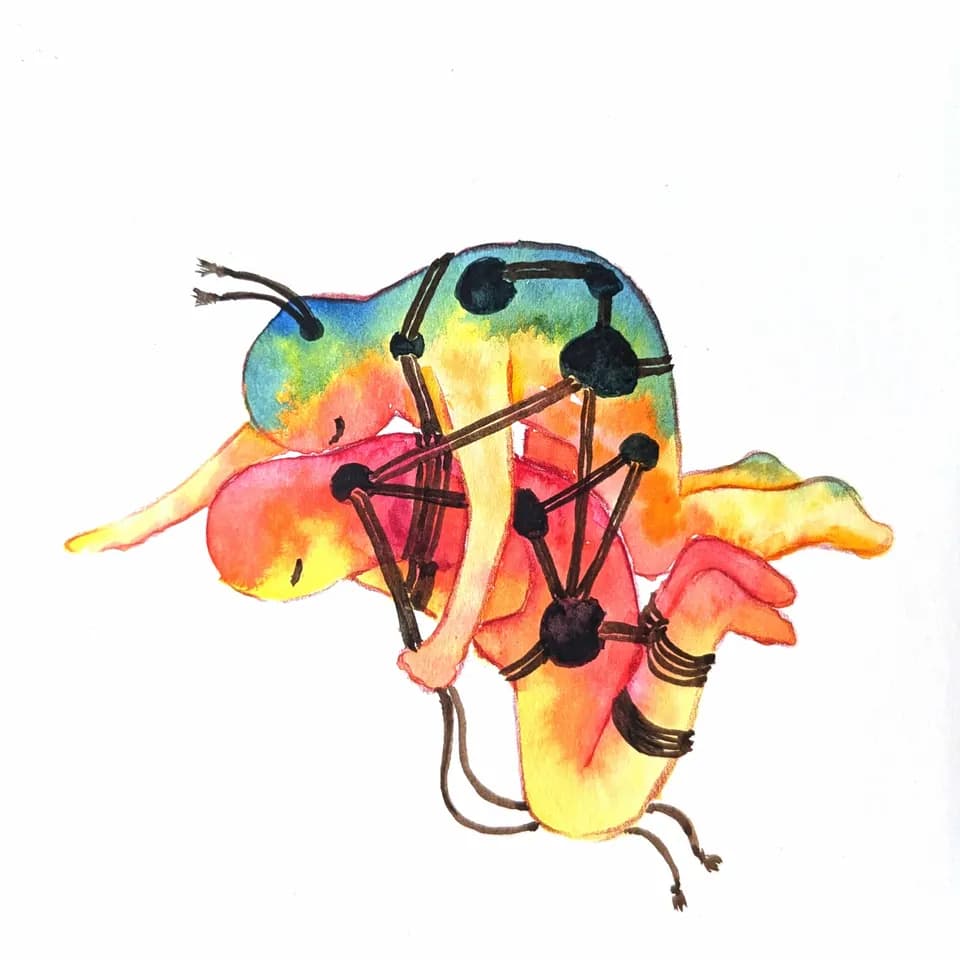
This is especially true in rope, where experiences touch on trust, vulnerability, intimacy and power. Sometimes we only understand what an experience meant to us once we have had some distance from it. Perhaps one of the limitations of this ‘traditional’ aftercare is that it assumes the most important questions can be answered immediately after the scene. And I think sometimes they cannot.
Not everyone needs the same ending
At this point, it is worth acknowledging that not everyone relates to rope experiences in the same way. Some people process through conversation or physical closeness. Others through journaling, movement, reflection, or simply letting an experience settle on its own. Some enjoy extensive debriefs. Others feel no need to revisit a scene once it has ended. None of these approaches are inherently better than the others.
When we talk about meaning-making, there can sometimes be an implicit expectation that those reflections should be shared. But meaning does not always need an audience. Not every insight needs to become a conversation, and not every experience requires ongoing analysis. What matters is not that we all process in the same way. What matters is recognising that experiences continue to unfold differently for different people.
So, the question is not whether someone is processing ‘correctly’. The question is whether we can make space for the possibility that there may still be something unfolding.
Relational care
For me, this is where the idea of the rope encounter as part of an ongoing relating becomes interesting. Not because every rope partner should suddenly become a therapist, a best friend, or a long-term emotional support system. Nor because every scene requires extensive follow-up. Rather, because rope happens between people.
Even when an experience is brief, it can shape how we relate to one another afterwards. Sometimes it deepens trust. Sometimes it raises new questions. Sometimes it changes nothing at all. Relational care is simply the recognition that shared experiences can have a life beyond the scene itself. Sometimes that looks like a check-in message the next day. Sometimes it means making room for a conversation if one becomes necessary days after. Sometimes it means explicitly agreeing that no follow-up is needed. The form matters less than the awareness.
Relational care is simply the recognition that shared experiences can have a life beyond the scene itself.
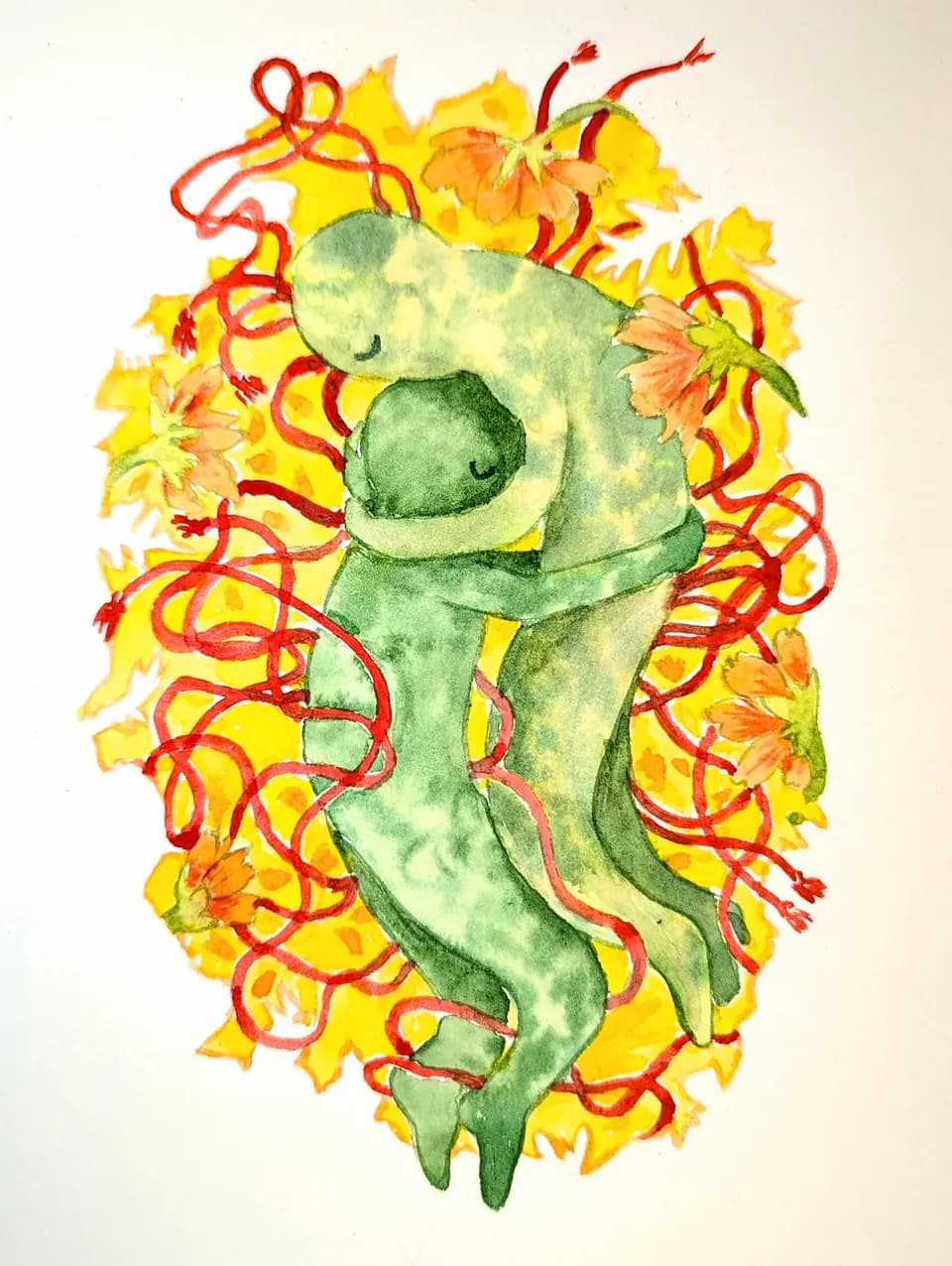
Perhaps what I am really arguing for is a broader understanding of aftercare. Beyond this single moment after the rope comes off, and more as something that unfolds across time. We have become quite skilled at asking what someone needs in the moment itself. Perhaps the next step is recognising that not all needs arrive at the same time. `
Or in short: some experiences really do ask for chocolate, but maybe others ask for silence and a conversation in two weeks.