Why Does Shibari Get You ‘High’?
A quick look at ‘rope space’ and the science behind the psychological peaks (and comedowns) of BDSM.

Ask any practiced rigger or rope bottom and there’s a good chance they’re intimately acquainted with the highs and lows characteristic of an intense bondage scene. To better understand why we emphasize negotiation and consent before a scene and why we crave care and attention after, it helps to know what happens in our minds and bodies during a rope session.
What is rope space?
Rope space, whether for bottoms or tops, is an altered state of consciousness that can occur during scenes. A rope drop, on the other hand, can be described as a type of hangover. This is because rope space is an actual high, but instead of being induced by the use of psychoactive substances, it’s caused by natural chemicals secreted by our own bodies. This high, whether you’ve consciously thought about it or not, is likely a major reason why you’re here in the first place, right?
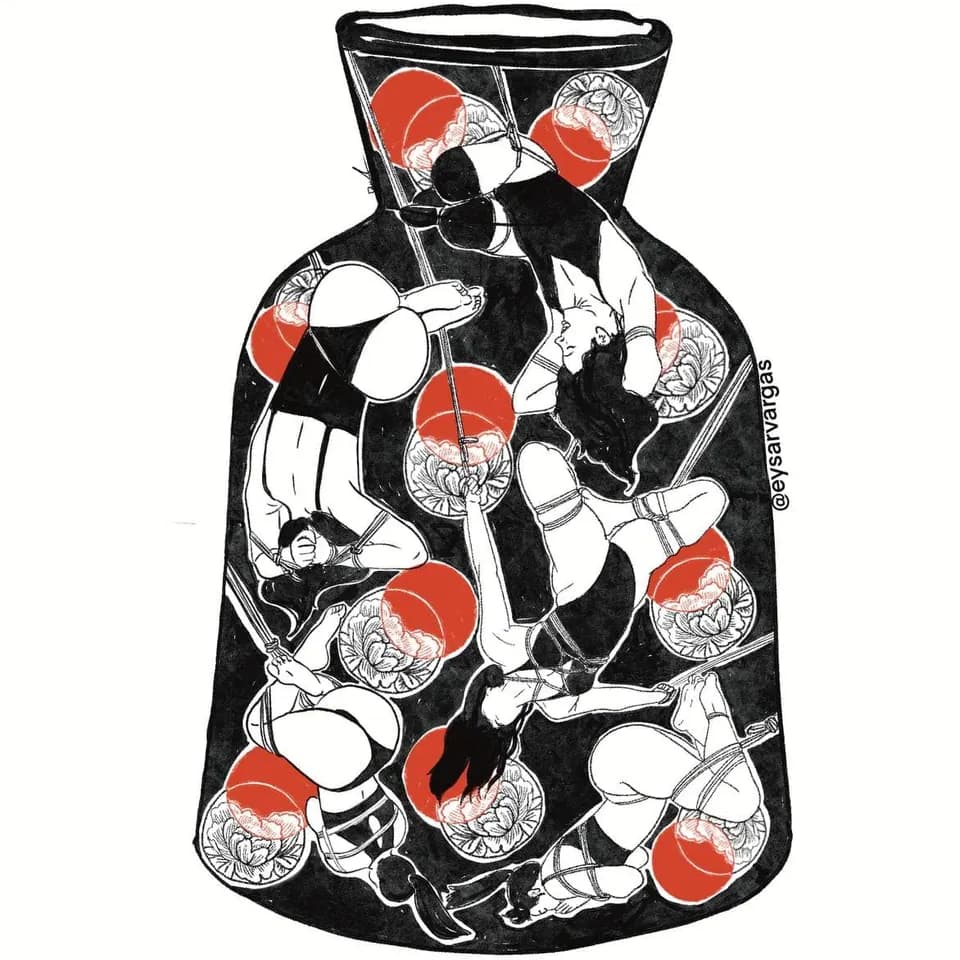
What is subspace?
When we’re tied up in ropes, our bodies release endorphins that bind to opiate receptors to naturally relieve pain while causing feelings of relaxation and calm.
When pain or otherwise intense sensations are coupled with excitement, anticipation or other potent emotional states, we release the neurotransmitter noradrenaline, a natural analgesic that reduces pain sensitivity while increasing awareness.
Subspace is a concoction of the above, often mixed with the cuddle-hormone oxytocin, the feel-good hormone dopamine, and the neurotransmitter serotonin.
It’s essential to discuss boundaries before the rope session – what somebody agrees to or consents to in subspace may not reflect what they would want in a clear state of mind.
Subspace sometimes causes temporary impairment of the brain’s executive function, which is what triggers that peaceful floating feeling where we forget all about time and leave reality behind to exist only in the here-and-now. This is also why it’s essential to discuss boundaries, limits, needs and desires before the rope session – what somebody agrees to or consents to in subspace may not reflect what they would want in a clear state of mind.
What is top space?
While less talked about, riggers and rope tops can also experience an altered state of consciousness. While bottoms usually report out-of-body, euphoric states, tops tend to describe feeling highly alert and aware mixed with deep empathy, involvement, and emotional connection with their bottoms. Some also report a high degree of excitement and thrill from the perception of power and control.
While the two spaces feel different, they share many of the same physiological features. In a sense, the top and the bottom are on the same ‘drug’ but with different chemical proportions and effects.
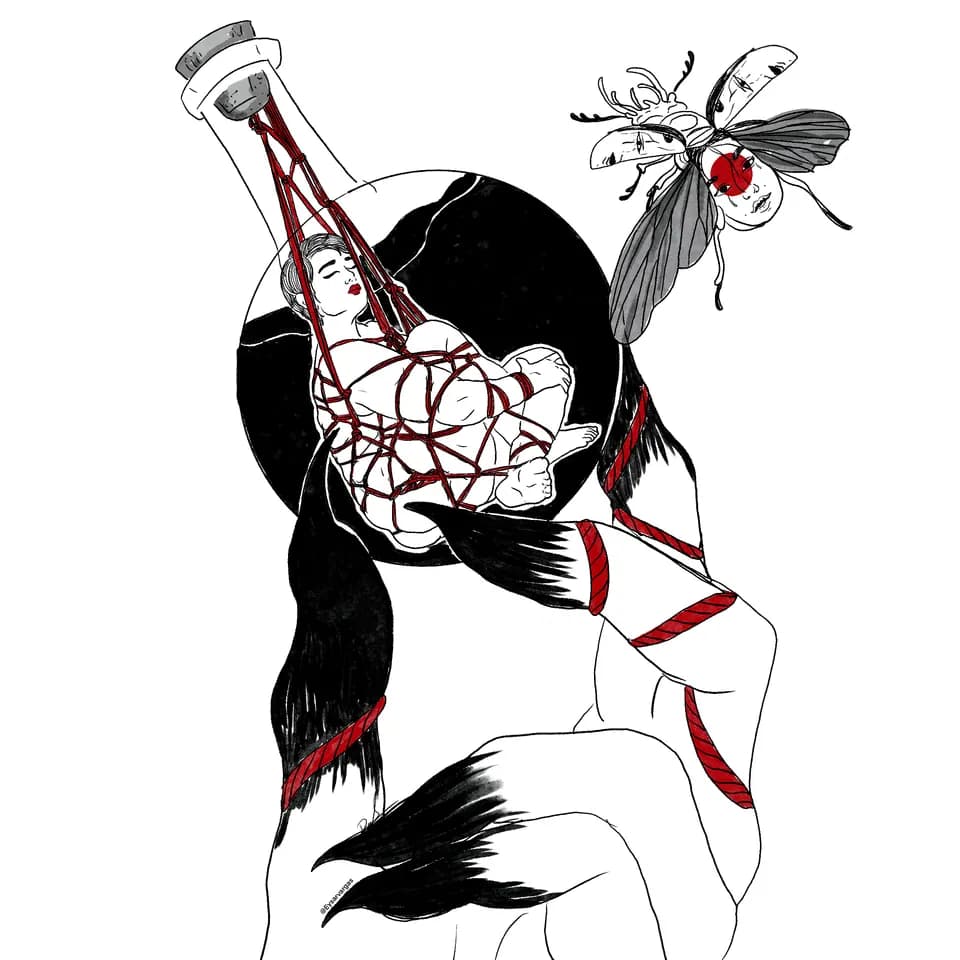
So, what is rope drop?
The depleted feeling that we sometimes experience after coming out of rope space is caused by the fact that we actually are essentially depleted. We’ve literally dumped a mass of feel-good chemicals into our systems and, as the effects wear off, our bodies go into a state of homeostasis in which they try to restore balance. In doing this, you’re left with effects that are the opposite of those you might have felt in ropes or tying, leaving you feeling exhausted, down, moody, or even depressed.
On top of the potent chemical high, a rope session often demands absolute vulnerability and trust between partners, which can cause an emotional drop as we transition back from deep, shared intimacy to the harsh reality of, well, regular life. As if we’ve been split wide open, aftercare and intentional checking in and support after our rope scenes can be seen as a way to get put back together.
Understanding how rope affects our brains – and the knock-on effect that encompasses everything from how we might perceive pain to our emotions during and after a scene – it becomes clear how important risk awareness, clear communication and checking in really are in our scenes. While we might just be ‘playing’, we’re playing with powerful physical and psychological states – a privilege not to be taken lightly.