Meet The Shibari Study Instructors: Ms. Reemah
Aria Vega speaks to Atlanta-based rope bondage educator Ms. Reemah to discuss connecting through kink, the human condition, and her two greatest passions: teaching and rope.

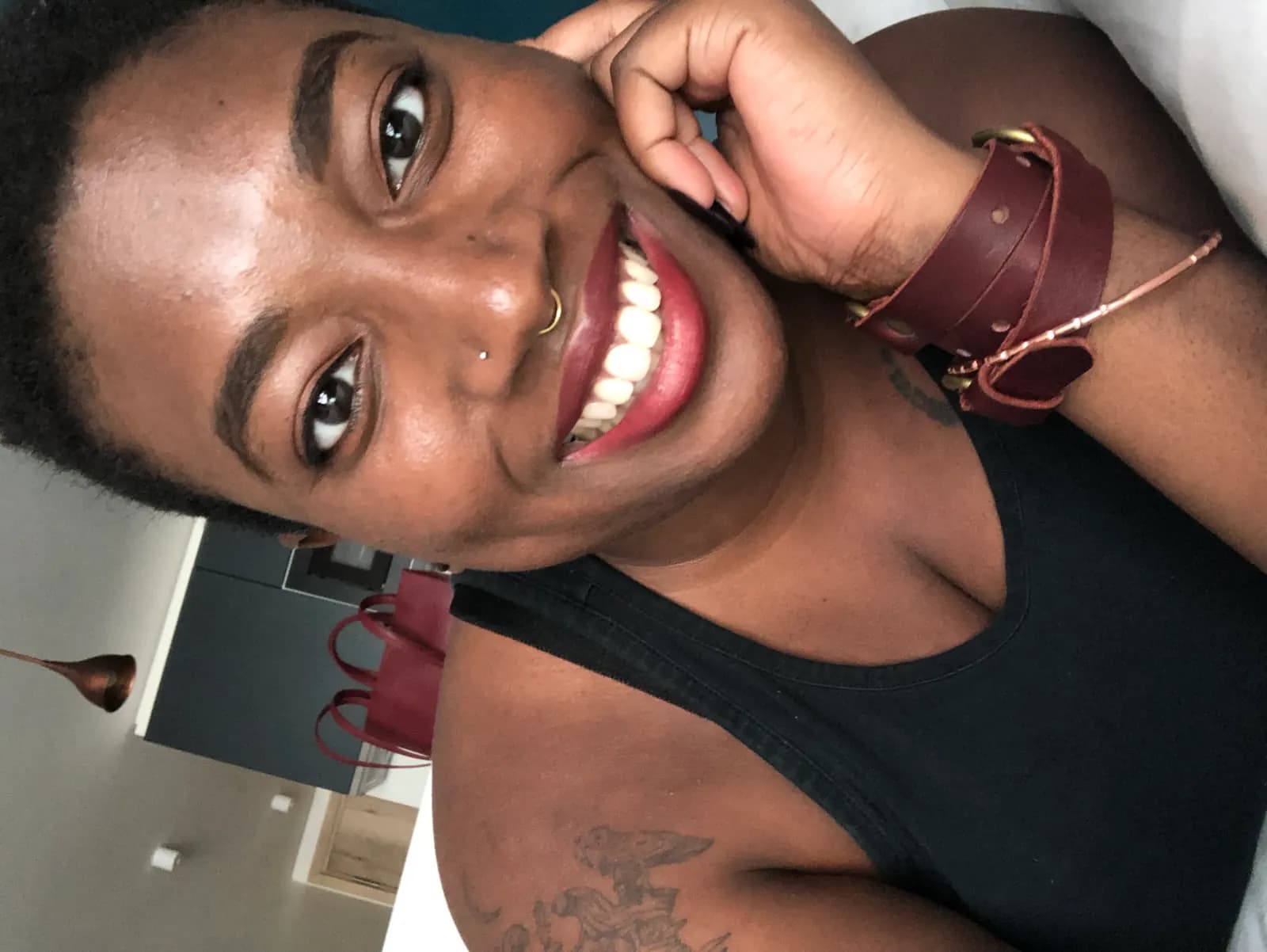
Domme, rigger, and rope educator, Ms. Reemah has fingerprints all over her local kink community. Since 2017, she’s been intricately bound to BDSM, from her service on the executive boards of Rope Bite Atlanta and Melanin Munch to co-founding the rope collective Haus Obsidian.
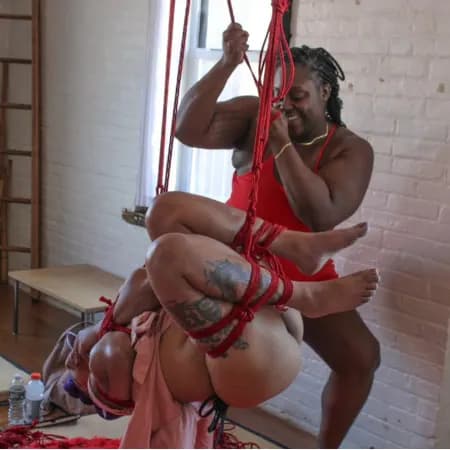
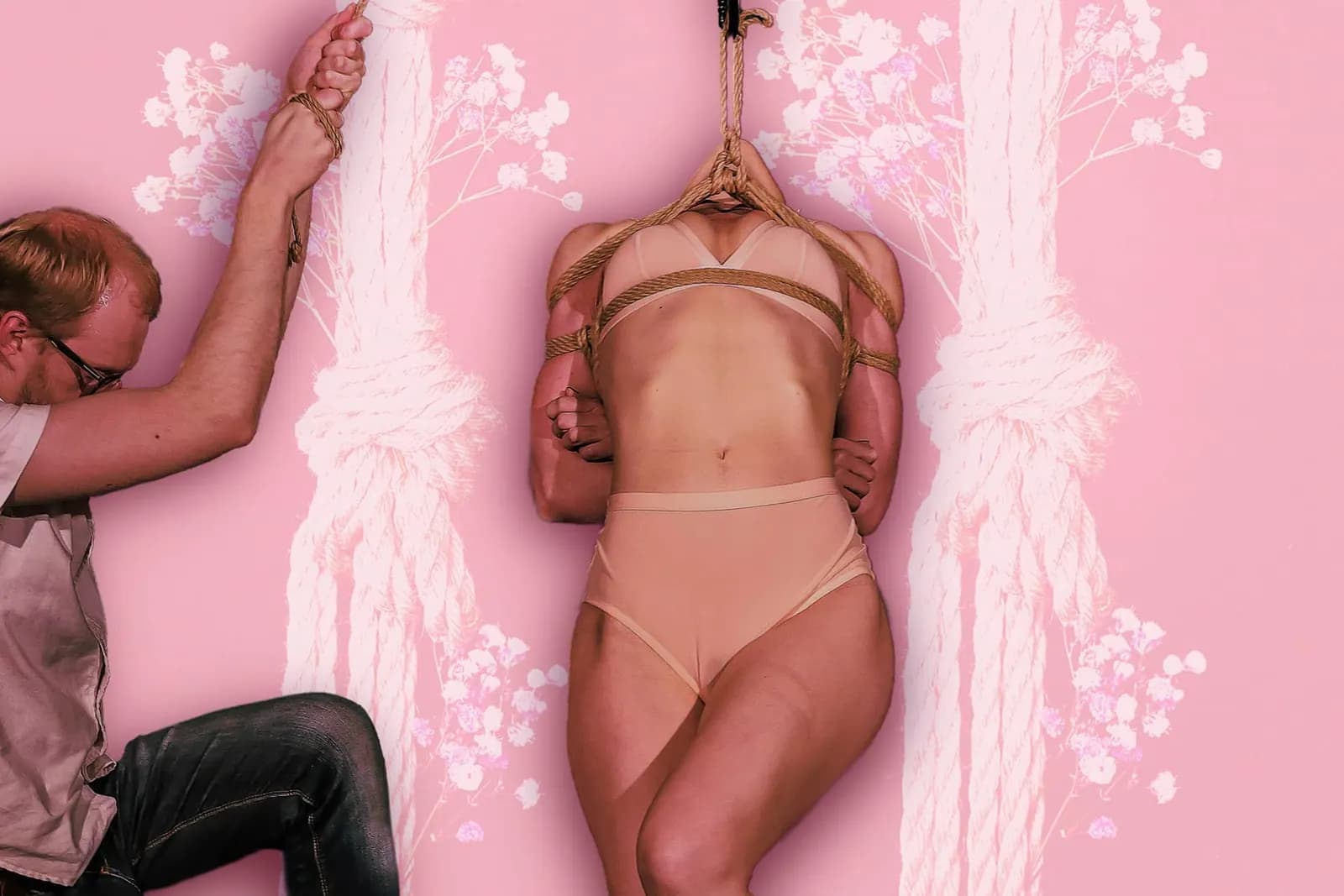
But before she was such a respected leader, Ms. Reemah just loved tying. For her, rope is a primary mode of connection and creative expression. With a passion for fine and performance arts, she covets the visual appeal of rope bondage, from which she receives the same pleasure as from stage plays or sculptures. “If I’m in a museum and looking at a piece of art, that’s what I want to see when I’m doing transitions. But it’s not an inanimate object – this is a whole body that I can maneuver in a way that it probably shouldn’t be,” Ms. Reemah says through laughs.
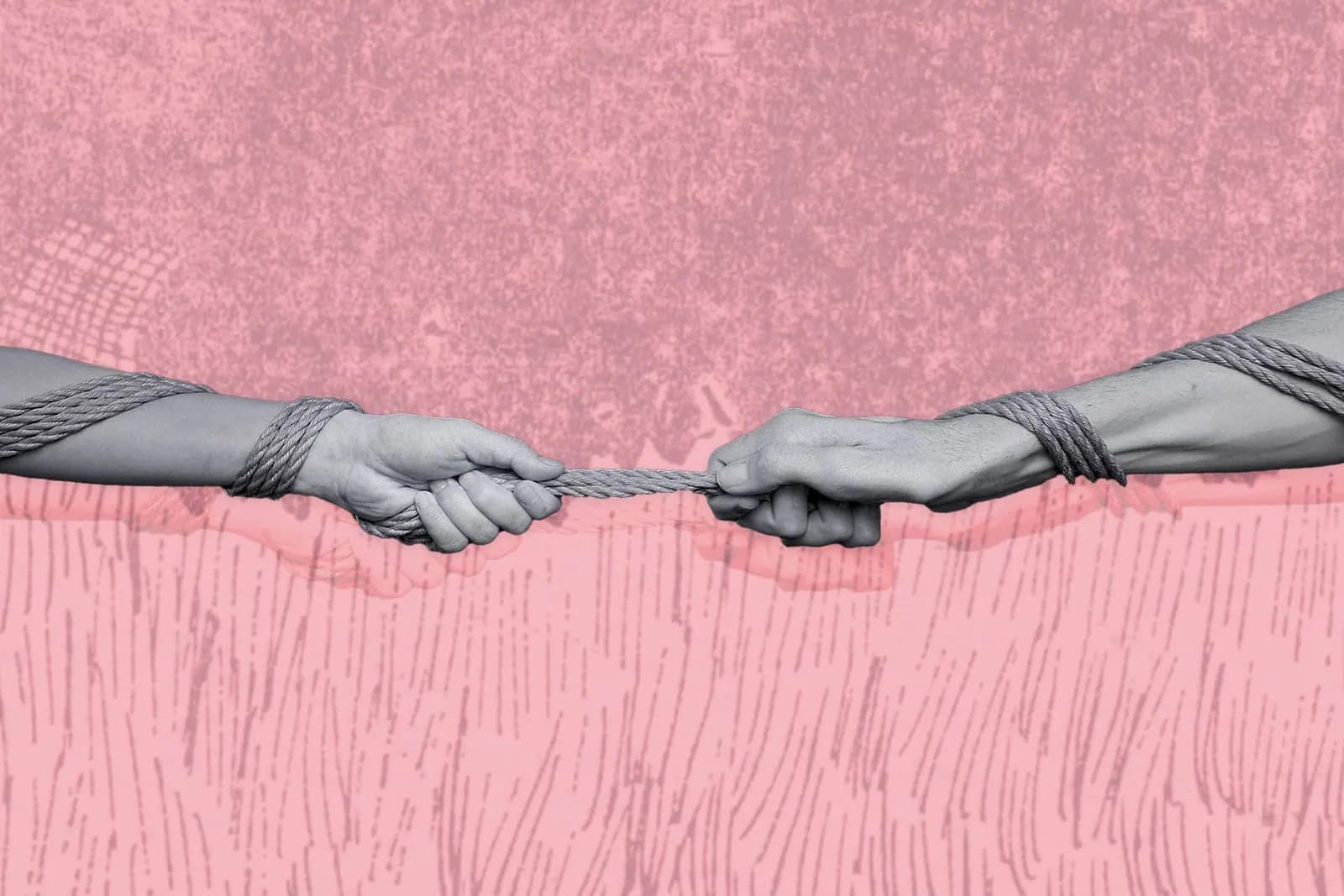
As for connectivity, of course rope offers that in a literal sense. But not unlike the ocean floor cables that power the invisible internet, tying can be thought of as union in the ethereal sense, too. “We’re literally tethered together, rigger to bottom, holding the same line. We are connected,” she continues, emphasizing the emotional aspect.
“We’re literally tethered together, rigger to bottom, holding the same line. We are connected.”

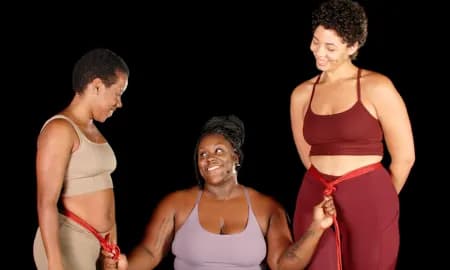
As a self-described anxious introvert in a highly social profession, Ms. Reemah sees bondage as a way to cope with that. It meets her right where she’s at, helping her build intimate connections that require less energy than the average verbal exchange.
That’s true for all types of relationships, but particularly her romantic ones. Around the time that she started tying, Ms. Reemah was dating someone with whom communication could be a struggle. Once, during an argument, she proposed a rope session. When they were done, the couple was suddenly able to work through the original issue. It almost sounds like the sex that couples often have to distract themselves from deeper problems, but for Ms. Reemah, this type of scene is genuinely therapeutic. “I just felt more receptive to what was actually being said, and better able to communicate clearly,” she explains.
Kinkster, therapist, rigger, friend
It makes perfect sense that Ms. Reemah finds so much therapeutic value in kink, given that she’s also a licensed mental health counselor. As both a rigger and a therapist, she takes a similar approach to each discipline, learning as much as she can about both her clients and her rope bottoms in order to tailor the experience to the individual.
This degree of attentiveness reveals the deep wellspring of empathy within Ms. Reemah, a key part of what makes her such a stellar Domme. When you’re seen and accepted for exactly who you are, and handled with care because of it, this fosters a degree of intimacy that makes our exchanges with others most satisfying.
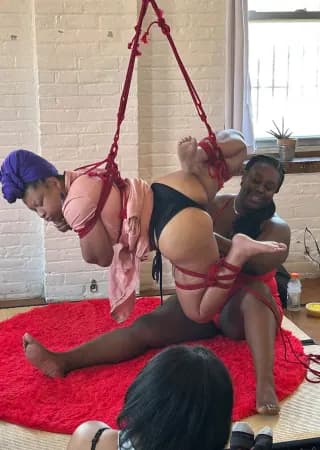
Ms. Reemah is also an expert educator, one driven by an insatiable curiosity around the human condition. She’s currently pursuing a Ph.D, a portion of which involves pedagogy, or the theory and practice of teaching itself. That path has taught her that nothing facilitates learning more than showing up in your full humanity as a teacher.
Nothing facilitates learning more than showing up in your full humanity as a teacher.
“The more authentic you are, the more likely someone is going to actually retain the information you’re giving,” she explains. “Talking off a PowerPoint just ain’t gonna do it.”
After acquiring her Bachelor’s degrees in Psychology and Business Administration, Ms. Reemah moved onto her Masters in Clinical Mental Health Counseling. During her graduate studies, she worked with incarcerated individuals, including non-sexual violent offenders, a population she noticed was overwhelmingly Black and low- to no-income.
These and other demographic factors helped her to unpack old biases around social deviance, and the way that various stigmas and stereotypes impact vulnerable populations. The more familiar she got with her clients’ backstories, the harder it became to say this is a form of “brokeness” or “wrongness”, and the more motivated she felt to help.“It made me even more willing than I already was to accept people regardless of where they’re from, how they present, or what they’ve got going on,” she reflects. “You just never know what people have been through.”
Such a disposition has been more than just a boon for her career. After scrolling through the plentiful red jute suspensions on Ms. Reemah’s Instagram feed, I was pleasantly surprised to learn she has offstage relationships with nearly all the models featured there. It made me wonder how intentional she was in cross-pollinating her personal and professional communities.
At first, she had every intention of keeping these realms separate: kinkster and therapist, rigger and friend. But that quickly became exhausting, and didn’t even come with clear benefits. “It was like I was splitting myself,” Ms. Reemah says, “and I didn’t feel like I was being authentic in either direction. At the end of the day, these are all aspects of a singular person: me.”
Where kink meets mental health
Over time, Ms. Reemah gradually became more comfortable with measured self-disclosure during her therapy sessions. The purpose of this is to normalize certain feelings around kink and queer identity in a way that her clients aren’t often exposed to elsewhere. Oftentimes, this process will reveal the failures of former therapists.
“When I got into private practice, I started getting clients who said they were previously harmed by other therapists,” says Ms. Reemah. These clients were reporting professional ineptitude around queerness, kink, and polyamory especially, clear evidence of undereducated practitioners. Sadly, she wasn’t surprised.
“I myself had been frustrated by not being able to take a human sexuality class in any of my postgraduate programs,” Ms. Reemah continues, “because most states don’t require it as part of the curriculum.”
She simply couldn’t accept that, and is now dedicating her doctorate studies to resolving that information gulf. At the moment, Ms. Reemah is crafting the proposal for her dissertation, in which she hopes to create a kink and BDSM competency scale for mental health counselors. Her ultimate goal is to enact a mandatory requirement for postgraduate programs in this field, and to foster the development of more ethical therapeutic procedures. The current dearth of such requirements is “deeply problematic” because of how integral sexuality is to so many people’s wellbeing.
Along with her multitude of degrees, Ms. Reemah has also received a thorough education from non-formal institutions, no less essential to her learning process. Atlanta, Georgia, boasts a prominent kink community, including organizations like Black FemDoms Atlanta, where she really cut her teeth.
That’s where she first learned to conduct each rope session in a manner that focused on the experience of bottoms. This resonated more with her caretaking sensibilities than the more Dom-centered rhetoric she’d picked up in the wild. “If something doesn’t go right, or if you’re not having a good time, that’s my responsibility as a rigger and no one else’s,” she tells me.
“If something doesn’t go right, or if you’re not having a good time, that’s my responsibility as a rigger and no one else’s.”

Black FemDoms Atlanta is also where Ms. Reemah was first encouraged to become an instructor. At first she doubted she was qualified, but at the insistence of her mentors, she applied to present at her first conference, and the rest was history. It was in these early teaching roles that she first became aware of how impactful her presence was.
Black female Dommes can be rare in mainstream spaces, and her event attendees made it known that her presence was a welcome surprise. This is especially true because Ms. Reemah’s rope bondage practice centers other marginalized experiences, particularly queerness and fatness.
Early on in her rope journey, she was searching for resources and opportunities to help develop her craft. She found herself inundated with images of bottoms who were exclusively thin and white. As a Black person of size, it made Ms. Reemah doubt that rope was an endeavor worth pursuing at all. She finally stumbled upon the profile of a woman with a bigger body and reached out right away. The woman encouraged her to create the images she was hoping to find. This inspired her to dedicate her budding practice to Black and brown bottoms of all sizes, so no one else would ever have to wonder if they belonged in a shibari studio.
Ms. Reemah also makes a point to address trauma and disability in her work, something she says is sorely lacking in both academic and kinky spaces. “The more marginalized identities you hold, the more likely it is that you’ve experienced some sort of trauma,” she says, which she can confirm from direct experience and is empirically supported through research. “I don’t feel you can navigate this world without coming from a trauma-informed place.”
Ms. Reemah also makes a point to address trauma and disability in her work, something she says is sorely lacking in both academic and kinky spaces.
Despite the multifaceted nature of her career, Ms. Reemah sees her work primarily as a marriage between her two greatest passions: teaching and rope. She’s steadfast in her belief that when people know better, they can do better, and without a doubt, she’s got plenty of knowledge with which to enlighten.
By the end of our interview, I had the strong sense that Ms. Reemah is uniquely equipped to meet this troubling sociocultural moment. What could be a better antidote to our lonely, divided, screen-addled times than the ethos of receptivity and responsiveness undergirding her teachings?
“Rope is my love language,” she’s been quoted as saying. Imagine the peace we might know if more of us learned to speak it.