Floor-to-Air Curriculum
4 levels designed to help you progress without getting lost or overwhelmed
Start anywhere & move at your own pace. Nothing is locked.
What you’ll learn
From brand new beginner to advanced suspensions
 Begin Level 1
Level 1
Beginner
Getting Started
Everything you need to know about safety, communication, rope handling, knots, frictions & basic harnesses.
- 101 safety
- Rope handling & flow
- Foundational knots & frictions
- Communication, consent & negotiation
- Simple harnesses & floor-based ties
Best for: absolute beginners & students who want to refresh the basics
 Begin Level 2
Level 2
Intermediate
On The Floor
Study suspendable harnesses and your first suspension line techniques. Play & expand your floor-based play.
- Body handling, flow & dynamic floor play
- Stable & suspendable harnesses
- Your first suspension lines
- Scene-building & how to bring intention to play
- Develop your unique style
Best for: beginners who’ve practiced the basics
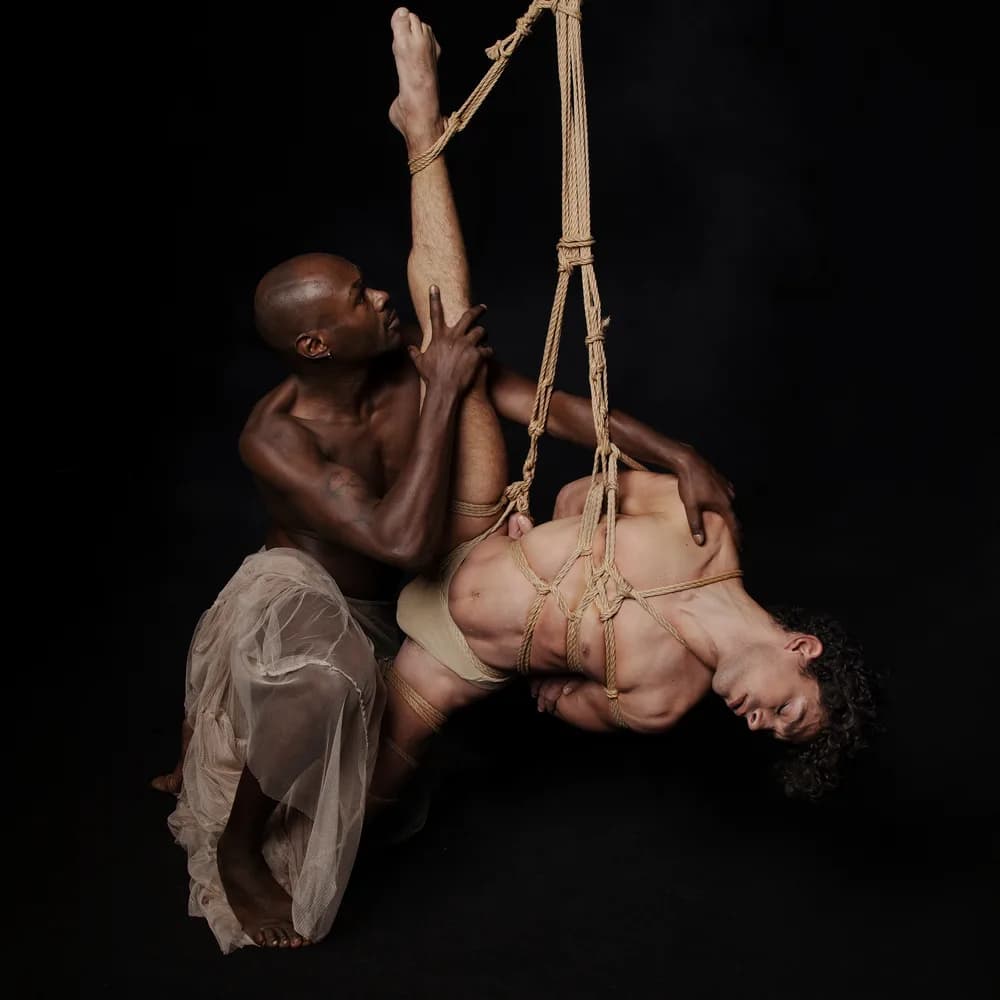 Begin Level 3
Level 3
Experienced
Into The Air
Play with partial suspensions & study full suspensions
- Suspension safety & communication
- Principles & mechanics of anatomy, positioning, harnesses & load
- Dynamic scene-building
- Develop your unique style
Best for: students moving toward suspension
 Begin Level 4
Level 4
Experienced+
Dynamic Suspensions
Play with partials & simple suspensions. Study transitions & dynamic suspension techniques.
- Transitions & sequences in the air
- Complex rope systems
- Understand common challenges
- Develop personal, expressive style
Best for: advanced students ready to deepen suspension practice intentionally


Start exactly where you are
You don’t need to be flexible, strong, experienced or partnered to begin.
Questions?
We’ve got your answers
As long as you want! Some courses will have just one or two videos in them while others will have more. Sometimes at the end of a course you’ll find recommendations to explore related content, and we encourage you to do so if you especially connected with the content or instructor. Some weeks you’ll have an easy time with the material, and some others you’ll have to repeat it over and over for it to stick. Ultimately, we want to equip you with the necessary skills to explore the world of shibari with confidence. We can’t assess your skills to tell you whether or not it’s time to level up or if it’s okay for you to skip some content. The best test of when to move on is how much fun you’re having and confidence you’re feeling. This just so happens to also be the best prize.
Not right away. While the classes are taught by partners tying each other, most of the practices through our Level 1 can be self-tied, including some upper body harnesses and play sessions just for your own exploration. If you need some help adapting for your solo learning, feel free to look around our Getting Started and Self-Tying beginner categories as well. When you’re ready to tie with someone, the skills transfer directly.
No. Hardpoints are tricky to resource and install safely, and most people don’t have them at home. By the time you reach suspension level in your journey, we strongly encourage you to start practicing in community or with an in-person instructor. Your local studio will likely have points for you to practice on and get familiar with, and helpful hands to keep you and your tying partner safe if needed. At this point, you can start exploring the different options available as well: our Suspension Points 101 is a good primer to see many of the safety and functionality assets you’ll need to consider if you choose to set up a suspension point on your own.
Not necessarily. Shibari Study was never meant to replace local communities or in-person learning, but it gives students access to exceptional instruction wherever they live. There is a lot of studying you can do safely from the comfort of your home, including all the material in our Level 1 / Beginner curriculum. Once you reach Intermediate level, we do recommend finding an in-person instructor or community to ensure the more advanced and risky techniques are executed safely.
Absolutely yes! None of the content is locked and if you ever want to skip all or part of a course, you can. Simply mark the course complete and be on your way. However, remember that this curriculum is designed to introduce you gradually to all the skills and techniques that you need to move from floor to air safely, and with a good dose of fun. We encourage you to skip ahead when you’ve learned material in-person, or if something feels not appropriate for you or your play style, but take a look at everything as you move through to make sure you don’t miss any of the information.
Starting out you will only need 1 or 2 hanks of rope. Our Safety 101 class, the starting point of the entire curriculum, will explain how to choose your rope and how to treat jute if that's your choice of material. As you progress and move up to Level 2, 3 and 4 the number of rope hanks you’ll need increases, and we will introduce you to other important equipment you’ll need if you choose to progress toward suspension. No need to get it all together at once: take your time to find the rope that’s right for you, and be mindful of equipment rating when you get to it. Our Safety 301 course covers all of that for you, so all you need to do is follow along.