Loading…
Welcome to the Challenge
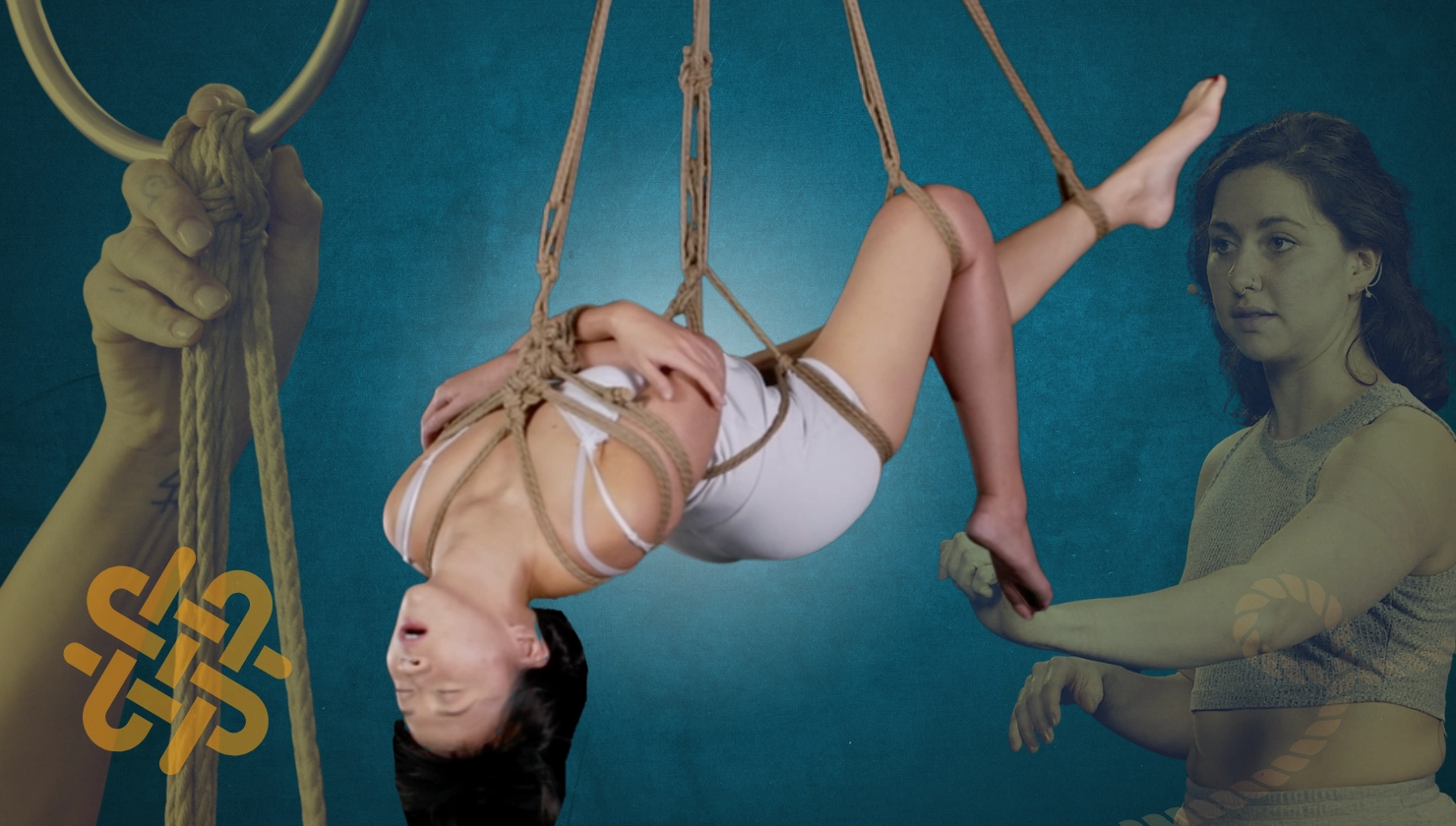
This challenge is designed for and in the early days of their suspension practice when support, stability and sustainability matter most. If you’ve already been learning suspendable harnesses, using inanimate objects to develop upline skills, and can confidently communicate with your tying partner on the floor and in partials, this one is for you. It is all about guiding you towards that first face-up suspension: think safety, drills and skills, and the perfect hands-front harness for achieving lift-off. While there’s room for adaptation, the simplest way to learn this is to use the suggested harnesses. If you want to use a separate hip harness and other upper body harness, that could work too. You could give yourself an added challenge of opting for a different upper body harness but using the same logic as in the video to incorporate hip support. Consider: how does the hip support get added and what elements would you need to see/not see to know if you could do the same thing to a different upper body harness? Our challenges are made for slow and gradual learning. Give yourself plenty of time to learn the information and to practice as you go. Only once you feel confident with one technique is it time to move onto the next. By the time you reach the final video, all the skills and techniques you use should feel like muscle memory and like you’re well prepared for the exciting challenge ahead.
Loading week 1…
Loading week 2…
Loading week 3…
Loading week 4…
Before you begin
Safety
You need some upline management and harness-building experience for this one. Don’t work through the whole sequence until you’ve labbed each harness (bottom and top) and can tie each harness from memory without referencing the videos. For your safety, read through the following considerations before attempting the final class. If possible, always do your first suspensions under the in-person supervision of a trusted instructor. You can find a local studio in our Studio Directory. If attempting this outside of a rope studio environment, have another person available to assist in case of an emergency. There’s an important “double bight” technique contained within the basic anchoring course. Make sure you find it and understand it so you can use it in the final suspension.
Join the conversation
Connect with us through comments, Community & Discord
Loading comments…